Certified Therapeutic Sound Practitioner
Sound-Based Recovery for Elite Athletes
The science of sound meets athletic performance.
What Is 'Therapeutic Sound Frequency'?
Frequency-Based Biology: Grounded in science that human physiological systems operate via measurable vibrations, allowing for targeted intervention through acoustic frequencies.
Acoustic & Vibrotactile Stimulation: Sound is mechanical vibration. Research demonstrates that certain acoustic and vibratory interventions can influence autonomic activity, HRV, perceived stress and relaxation.
Complex Acoustic Resonance: Acoustic instruments produce rich combinations of fundamental tones, harmonics, overtones and physical vibration that provide multidimensional auditory stimulation.

Performance Requires a Pulse
We ask athletes to perform at superhuman levels, but their biology remains fundamentally human.
To sustain optimal performance, the nervous system demands intentional periods to rest, restore, and recover.
Professional athletes are amazing, but sustainability is born in the moments of restoration. Are we giving them the tools to recover as hard as they train?

Why Does It Matter for Teams?
REDUCES pre-game anxiety and fight-or-flight activation.
SUPPORTS post-game down-regulation, relaxation and sleep readiness.
PROMOTES a shared recovery experience that may support team connection and cohesion.
COMPLEMENTS existing recovery protocols with a low-tech approach.

Recovery Protocol Samples
The Post-Game Downshift: A 20-30 minute Sound Journey following competition, designed to support autonomic down-regulation and transition from performance demand toward recovery.
The Travel/Sleep Bridge: A relaxation-focused session for away games and travel, designed to reduce arousal and support the transition toward restorative sleep.
Team Recovery Sessions: Group Sound Journeys incorporated into recovery blocks, providing athletes a shared period of intentional nervous-system down-regulation.

A Modern Tool, Rooted in Ancient Practice...
Indigenous acoustic instruments - including bowls, gongs, drums and flutes - produce complex combinations of tone, harmonic content, rhythm and physical vibration.
Emerging research demonstrates that acoustic and vibroacoustic stimulation can influence brain activity, autonomic regulation and perceived relaxation.

Quick Science Overview, Pt. 1
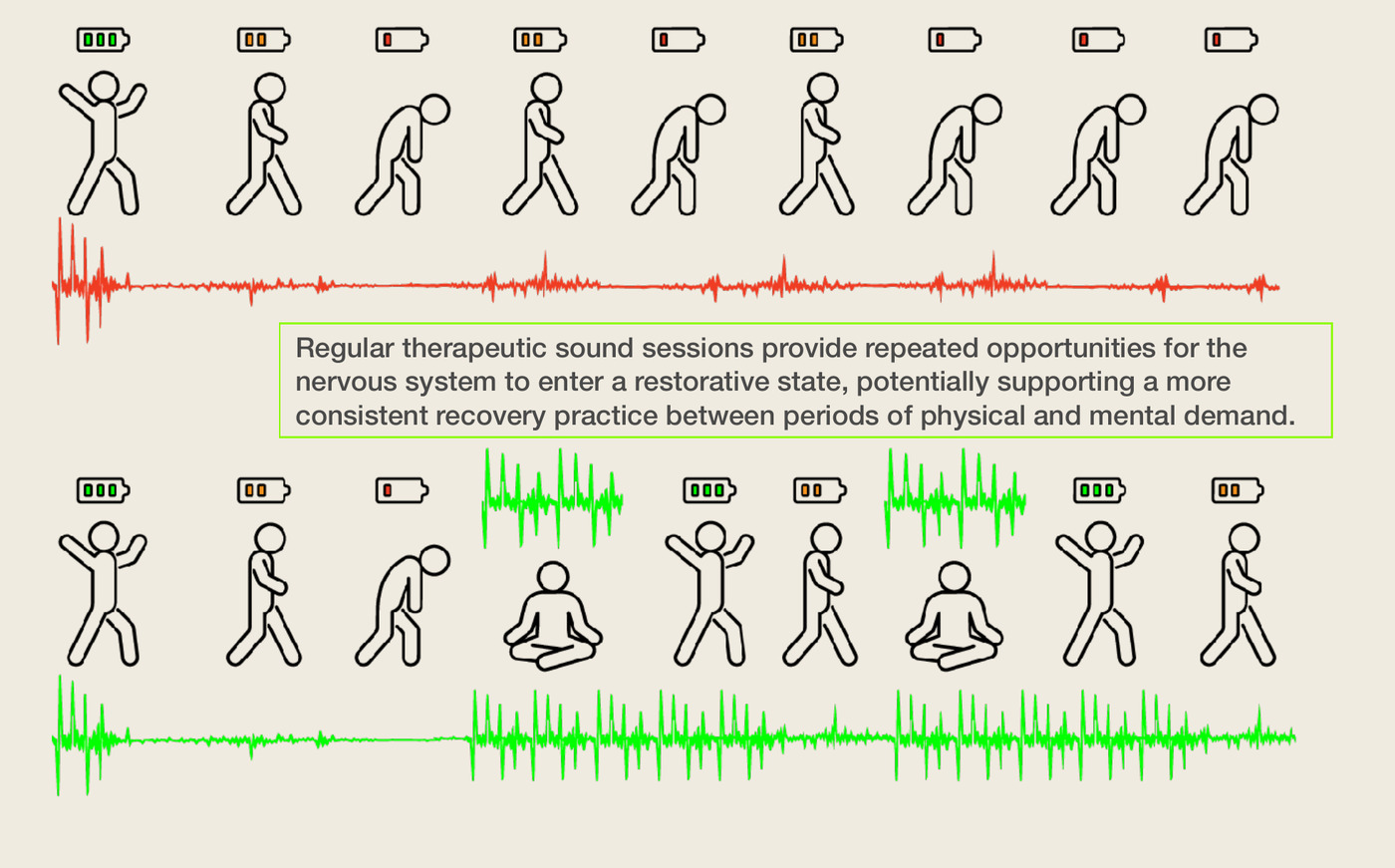
Repeated high-performance demands increase autonomic load. Without adequate recovery, sustained stress can contribute to autonomic imbalance and interfere with optimal physical and psychological recovery.
The autonomic nervous system, HPA stress axis and immune system are interconnected - meaning prolonged stress affects more than simply how an athlete feels mentally.
As a result, the body's NATURAL recovery system isn't allowed to replenish, recover, restore and, at times, fully develop the body's full capacity of its normal potential.
Quick Science Overview, Pt. 2
The human body naturally adapts to its environment. Without adequate natural recovery, however, the nervous system can remain in a prolonged state of survival - commonly known as fight or flight.
Conversely, therapeutic sound and frequency can help create the conditions for the nervous system to move toward coherence and a parasympathetic "rest and recover" state. As the body settles, it can redirect energy away from sustained stress responses and toward its natural processes of recovery, regulation, restoration, and physical replenishment.

Proven Results
Elite Sport Adaptation: The 2025 U.S. Open player recovery suite incorporated binaural audio and vibroacoustic technology as part of a broader nervous-system recovery environment. Vanity Fair
Peer-Reviewed Studies: 62 participants reported significant reductions in tension, anger, fatigue and depressed mood following a singing-bowl sound meditation. PubMed
EEG Research: A 2023 study found measurable brain-wave synchronization to the 6.68-Hz beat frequency produced by a singing bowl - a frequency within the theta range associated with meditative states. PubMed

Summary
Sound-based recovery has moved beyond theory. A growing body of clinical and physiological research demonstrates measurable effects on anxiety, stress, HRV, relaxation and brain activity.
The opportunity now is to explore how these evidence-aligned principles can be responsibly applied within high-performance athletic recovery.
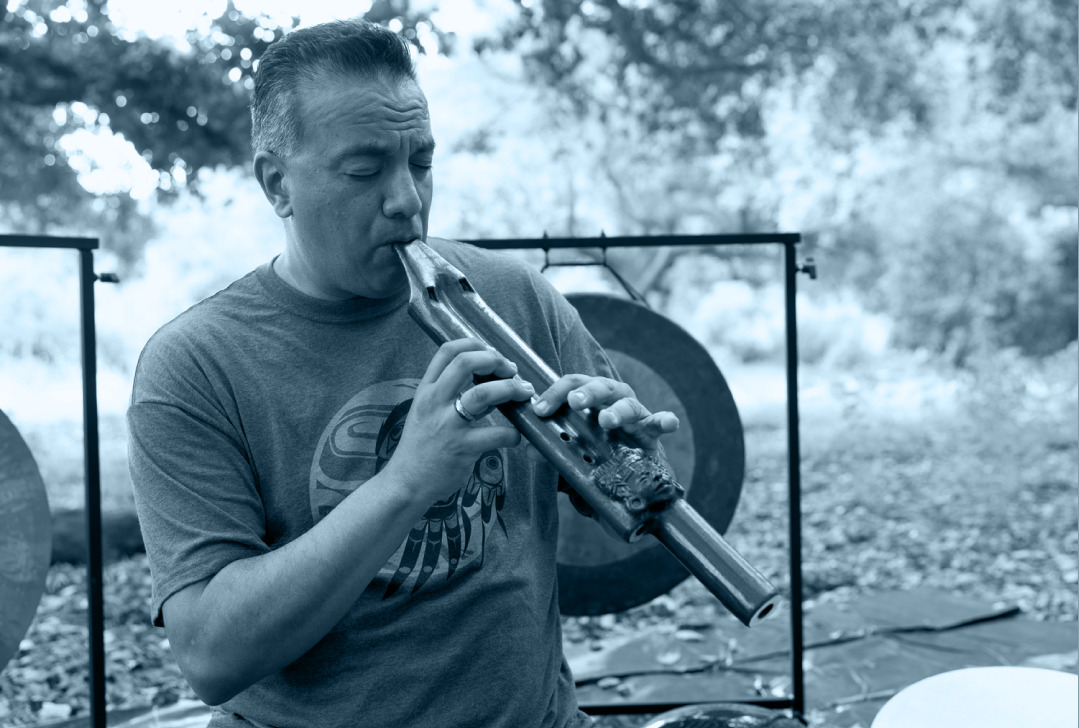
Gene Jimenez
The Athlete's Perspective: Former NCAA collegiate athlete. Understands the "grind" of elite performance and the physiological cost of high-stakes competition.
Indigenous Heritage: Grounded in ancestral traditions, utilizing acoustic instruments crafted from natural materials - wood, skin and metal - whose use in ceremonial and restorative practices long predates modern therapeutic sound technology.
Certified Expertise: A Certified Therapeutic Sound Practitioner with a science-based education in nervous system regulation and frequency therapy.
Modern Application: "I don't just ‘play music’; I produce Sound Journeys. My approach blends indigenous wisdom with modern biometric data to support elite recovery through parasympathetic downshifting."
Gene Jimenez
Cert. Therapeutic Sound Practitioner
Selected Research
Slide 1 of 12 - use the arrows or your keyboard